What is a watershed?
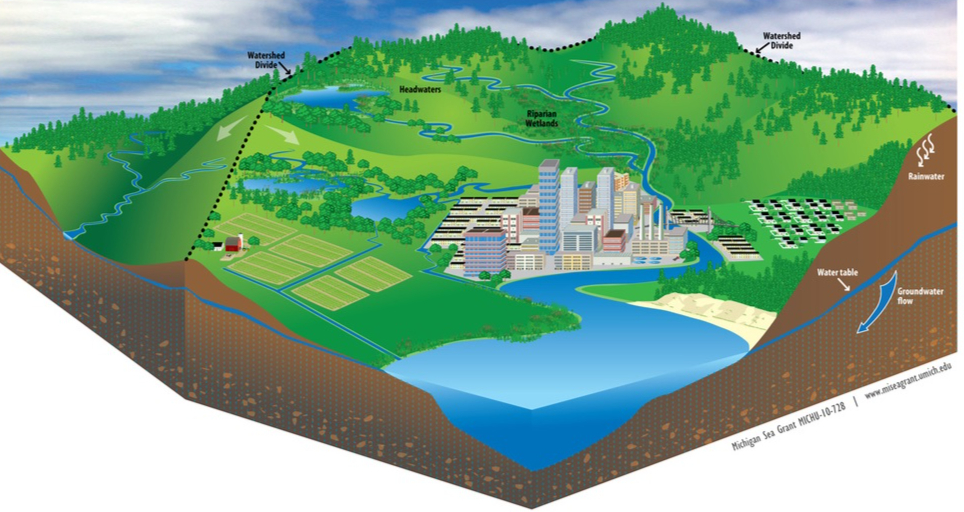
A watershed is all the land area that drains to a specific lake, river, wetland, or other waterbody. Watersheds range in size from a few square miles to an entire country. No matter where a drop of rain falls within a watershed, it will all end up in the same body of water. In VLAWMO's watershed, water eventually flows to East Vadnais Lake.
Who manages watersheds?
Water doesn't follow familiar boundaries such as city and county borders. It moves differently, and this requires organizations of various kinds to work together.
Many municipalities are involved in water management. VLAWMO is a Water Management Organization, a special type of local government. Some communities have Watershed Districts or Soil and Water Conservation Districts. If you'd like to learn more about the various types of water organizations in Minnesota, visit the Board of Water and Soil Resources (BWSR) website.
VLAWMO's work as a water management organization is multi-faceted. We prioritize partnership with other organizations, and we value input from watershed residents. You can learn more about our work on the What We Do page. Check out Minnesota Watersheds for the most up to date maps of watershed organization boundaries.
What challenges is the watershed facing?
Imagine you're a raindrop.
When you fall from the sky, you land on the ground and start your journey. Along the way, you pick up garbage or other pollutants on the ground. You travel across surfaces, through storm drains, or perhaps through a ditch. Eventually your journey ends in a lake or wetland, or perhaps a stream. When you get there, you meet a crowd of other raindrops that took a similar journey and also carried pollution with them. This effect is what we call nonpoint source pollution.
This type of pollution can come from various situations and practices, including:
- Sediment from eroding banks, bare soil, or improperly managed construction sites.
- Grass clippings or leaf litter left in the street or improperly disposed of in a ditch, storm drain, or forest plot.
- Salt from deicing activities, especially when applied in excess.
- Bacteria and nutrients from neglected pet waste.
- Oil, grease, or antifreeze from automobiles.
- Excess fertilizers, herbicides, and insecticides from overuse or improper application.
- Trash or other non-rain or non-snow substances that collect in ditches or storm drains.
How can residents take care of the watershed?
Protecting our watersheds - and the waterbodies they feed into - takes collaboration from each of us. Our Take Action page has more detail on practical steps for water stewardship. Below is a starting list of ways you can help support our watershed:
- Pick up trash and pet waste promptly to reduce risk of downstream contamination.
- Properly dispose of yard waste at a compost site or through a curbside service.
- Properly dispose of hazardous materials, home renovation chemicals or debris, and cooking oils/grease.
- Mow grass at 3" high or more to reduce runoff, shelter soil, and encourage root growth that reduces the need to irrigate.
- Practice only rain down the drain and spread the word. Learn more at Adopt-a-Drain.org.
- Learn about and help prevent the spread of invasive species.
-
Explore the many styles of alternative turf, bee lawns, native plants, and rain gardens.