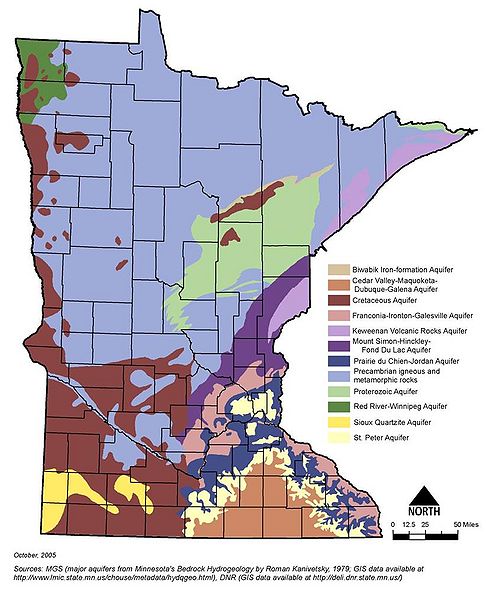
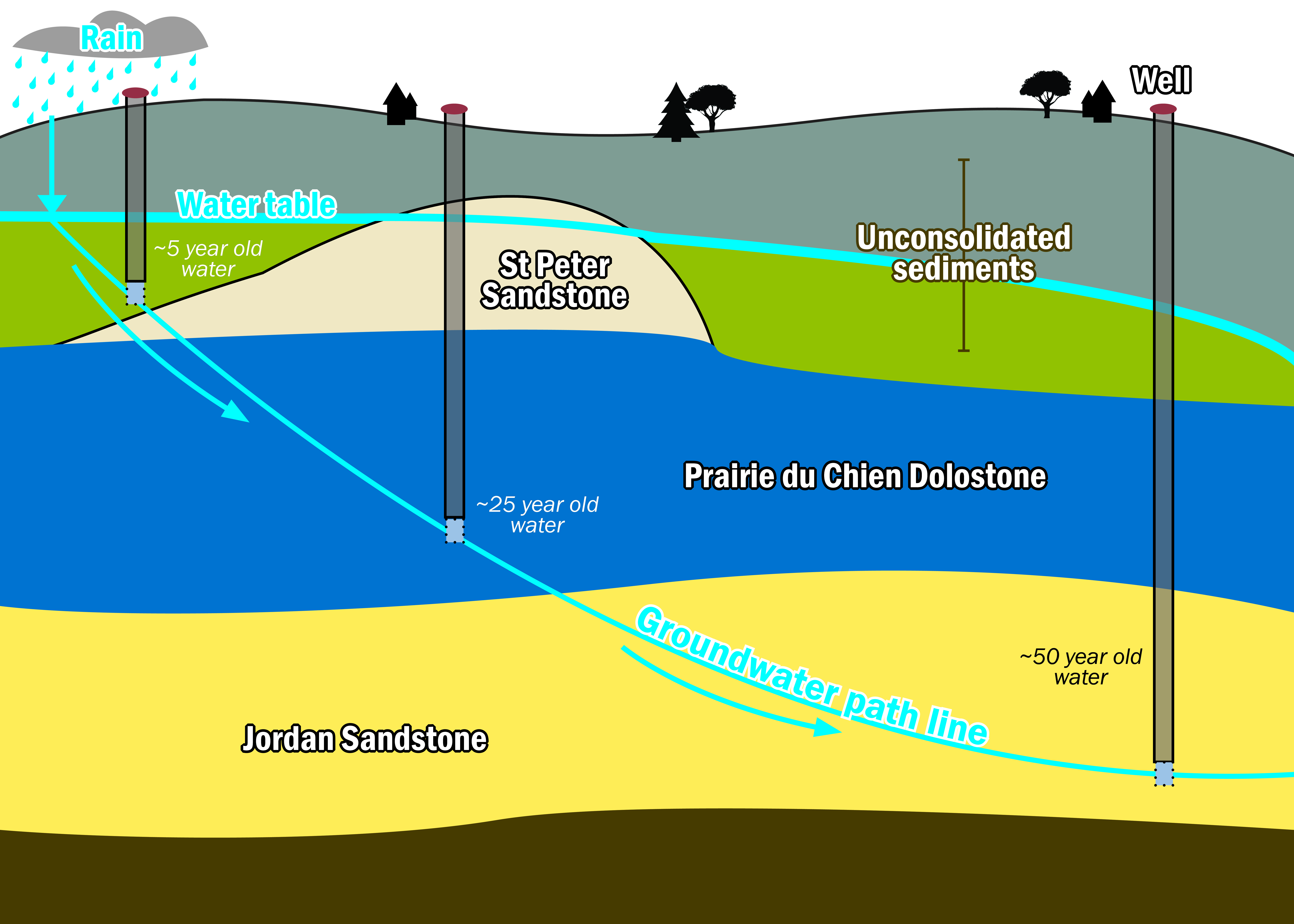
The VLAWMO watershed is primarily served by private wells that draw from bedrock of the Saint Peter Sandstone and Prairie du Chien-Jordan aquifers.
Domestic wells typically draw from the uppermost aquifer. While large supplies of groundwater exist in our region, it is still finite and sensitive to contamination from improper waste disposal, poor well construction maintenance and/or sealing, and poor water conservation habits.
Much of the water we use for everyday life is hidden.
Similar to finances, groundwater quantity is the result of many deposits that happen out of sight. Like a bank account, groundwater can store water deposits for days, years, or even longer. But both a bank account and a source of water have their limits. Groundwater is shared and influenced in a more direct and interdependent way than a bank account.
Water professionals help us check on our groundwater “bank,” but Cities, Townships, schools, homeowners associations, faith-based groups, and everyday folks are key to maintaining our water budget. Residents and businesses can help support our groundwater by reducing excess water use, reflecting on water use habits, paying attention to regional water reports and updates, and exploring tools that help us learn more and try new things.
Download the Twin Cities Groundwater Digest to learn more on how groundwater works and how communities in the Twin Cities Metro affect it.
A small water footprint helps maintain groundwater supplies at safe, accessible levels for human health and the environment. While there may be abundant groundwater supplies across Minnesota, issues can arise that change the rate, accessibility, and costs associated with using that water. These changes can require careful discussions in budgeting, risk management, and community planning to match the quality of a water resource with an intended use.
- Preserving adequate water for emergency uses such as firefighting and hospital use.
- Preserving water for drinking water supply.
- Buffering the impacts of climate-related drought.
- Reducing public health risks such as higher concentrations of natural and human pollutants that come with lower water levels.
- Reducing competition and conflicts around water by reducing regional demand.
- Reducing need for expensive water treatment projects to transport and store freshwater.
- Keeping water available for lakes, rivers, and streams that are used for recreation and wildlife.
- Building neighborly habits that protect future water access.
These challenges include:
- Changes on the landscape that can influence how and where groundwater recharges.
- Legacy contaminants from former dump sites or new contaminants from improper chemical use and disposal.
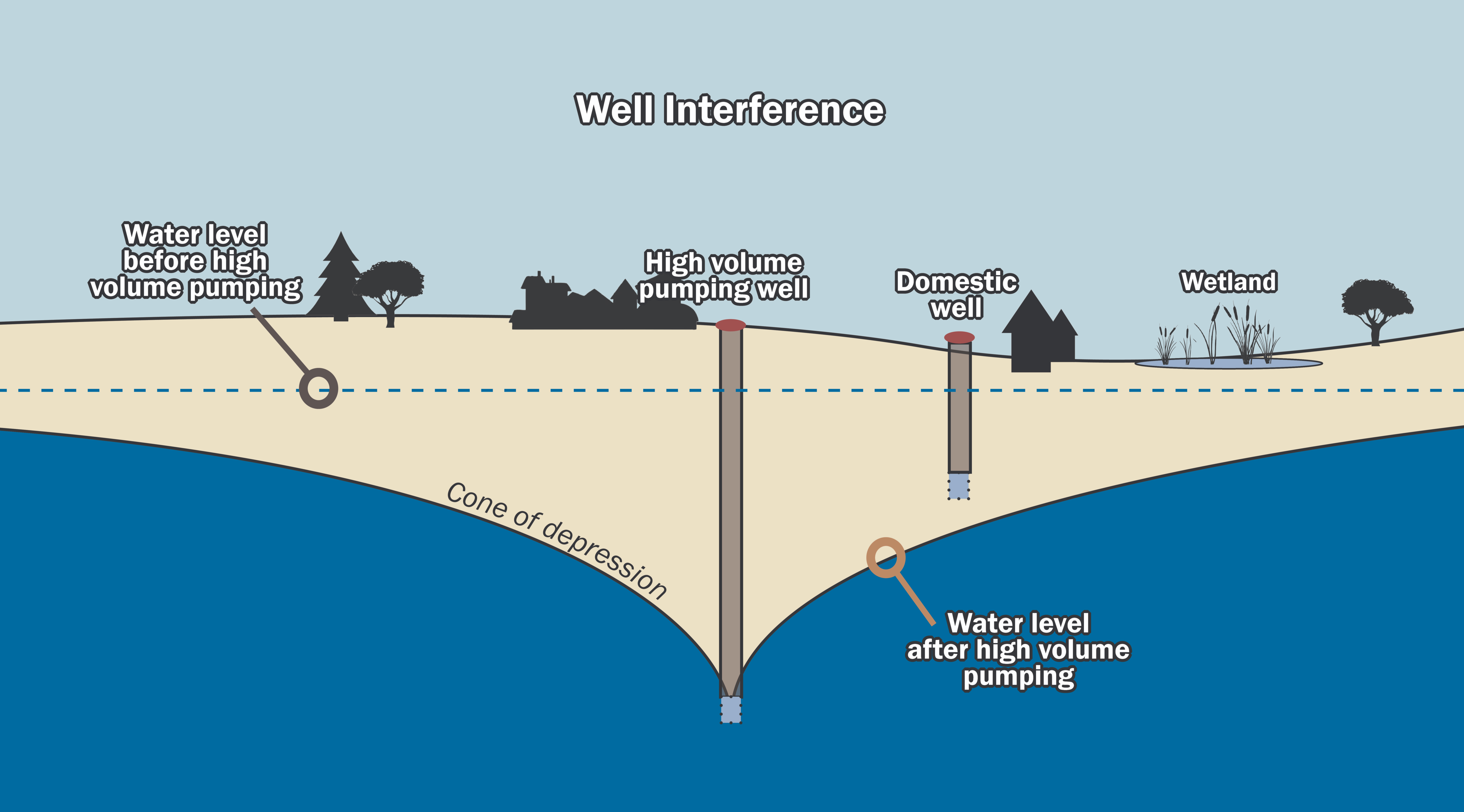
- Well interference that can occur when aquifer pressures or levels change locally or regionally. Well interference can contaminate wells with increased sediment or metals or cause shallower wells to go out of water. Keeping water conservation a priority can help mitigate conflicts and reduce the impact of groundwater drawdown as illustrated in the diagram below.