Elmwood Park
Quick glimpse
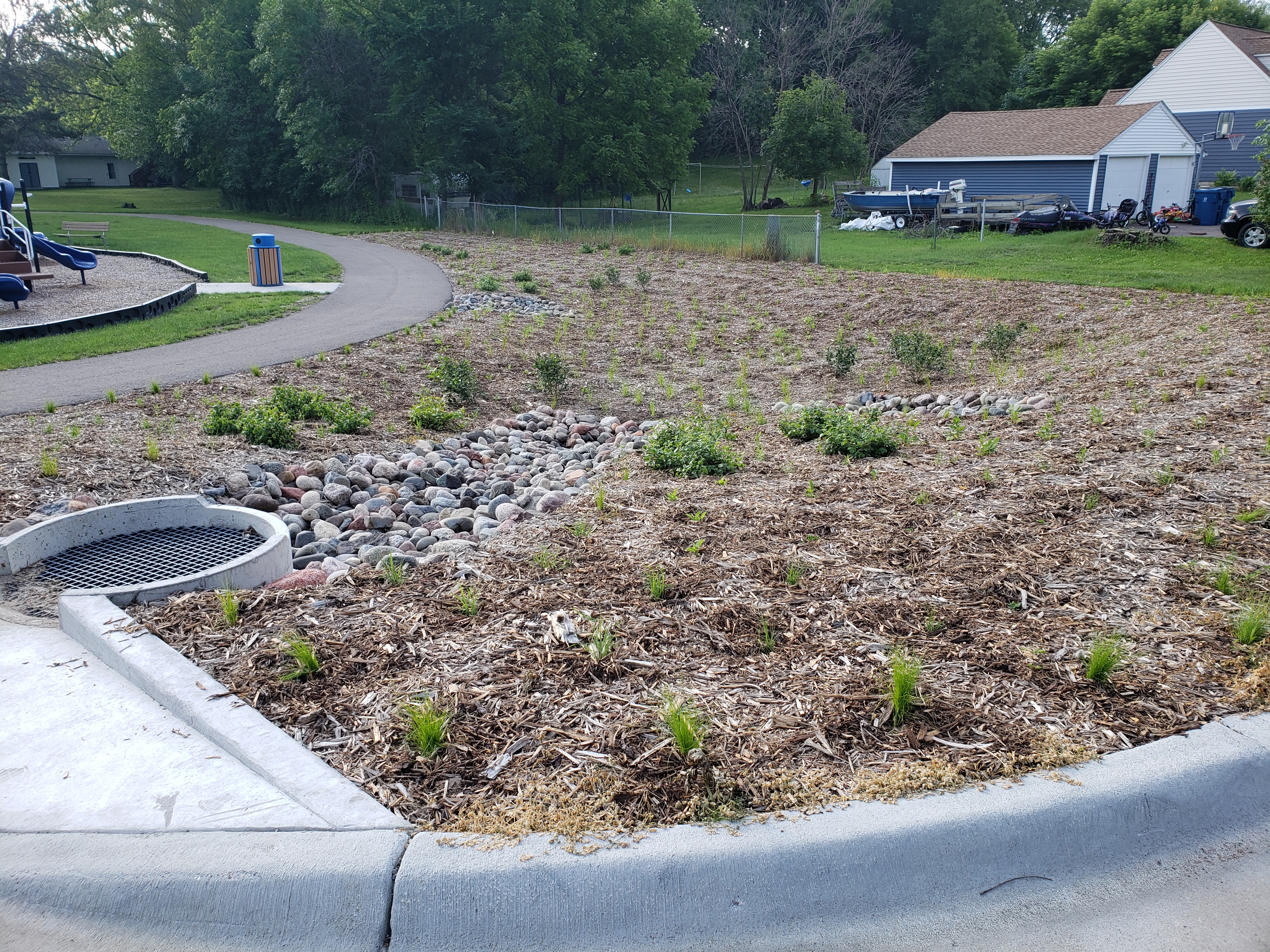
A rain garden is a specially designed planting with a bowl shape to capture and filter rainwater from surrounding hard surfaces. A curb cut rain garden means a break was created in the curb of the street to allow water runoff directly from the street to enter the rain garden.
This 1,200 square foot curb cut rain garden captures and treats water that runs off hard surfaces in Elmwood Park, Elmwood Street, and adjacent homes before it drains to Lambert Creek.
This rain garden has several high-impact features:
- A concrete curb cut with a pretreatment structure that collects sediment, debris, and trash before it can enter the rain garden.
- Added sand to replace contaminated soil.
- Areas of mixed rock to reduce erosion as water flows into the garden.
- A berm to help water stay in the rain garden and soak into the ground.
- Over 1,000 native plants that bloom throughout the growing season to provide pollinator habitat and filter pollutants from water runoff.
Funding
This project was a partnership between the City of Vadnais Heights, Ramsey County Soil and Water Conservation Division, and VLAWMO. The City provided funding through local cash match and VLAWMO providing grant funding through VLAWMO's Landscape Level 2 grant program, as well as the Minnesota Board of Water and Soil Resources (BWSR) Watershed Based Implementation Funding program.
Reason for project
Since 2021, VLAWMO has partnered with the City of Vadnais Heights to install water quality and stormwater treatment projects in City parks, including this new rain garden. The City added a new trail and parking lot to Elmwood Park, which was a cost effective opportunity to install a rain garden and ensure runoff from the new hard surfaces could be captured by the rain garden.
This area sends water to Lambert Creek, which eventually flows to East Vadnais Lake. Lambert Creek is currently impaired for E. coli. This project is one way of addressing this bacteria pollution and filtering more stormwater before it reaches the creek.
Results
This rain garden is estimated to annually capture about 362,820 gallons of water, and remove 3.6 pounds of total phosphorus and 942 pounds of total suspended solids from water runoff.
Related projects
East Vadnais Lake Subwatershed Resiliency Project
A resiliency study and implementation project for the East Vadnais Lake direct subwatershed.
North Oaks Entrance
A biofiltration basin (rain garden) at the south entrance to North Oaks off Highway 96.
City of Vadnais Heights Rain Garden
A rain garden located in the overflow parking lot of the Vadnais Heights Fire Station.