
North Oaks Entrance
Quick glimpse
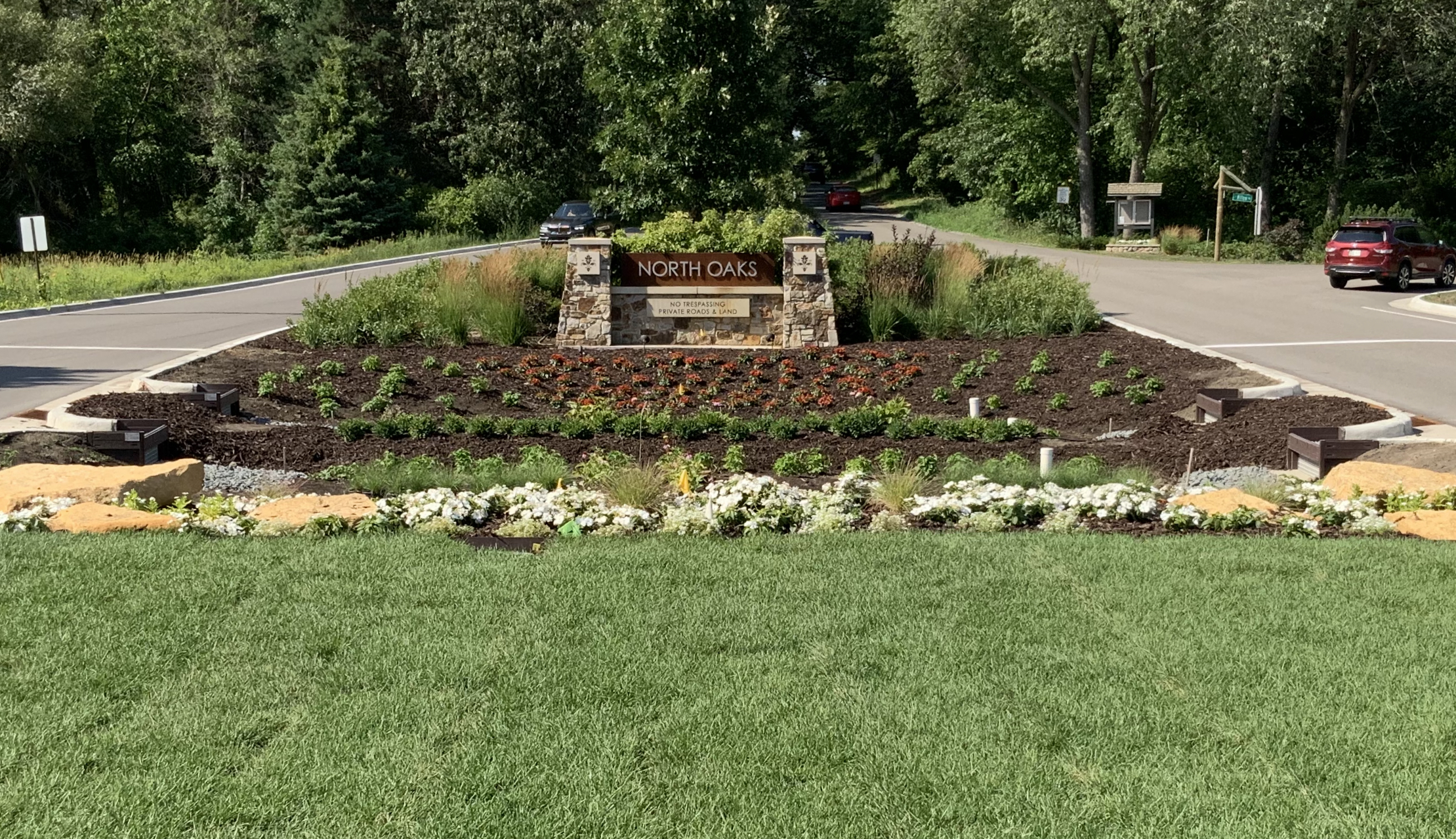
A biofiltration basin, or a rain garden, is an engineered, shallow depression that has specially designed soils and native plants that capture and filter water runoff.
This 2,308 square foot biofiltration basin captures and treats water that runs off Pleasant Lake Road and Highway 96 before it drains to 2 wetlands adjacent to Pleasant Lake Road and eventually Sucker Lake. The biofiltration basin has:
- 4 pre-treatment structures that collect debris, sediment, and trash before it can enter the basin.
- Native plants to help filter pollutants from water runoff as the water soaks into the basin.
- 12 inches sand media to encourage water filtration.
- Drain tile to remove excess water after the water is filtered.
- Colorful annuals in the front of the basin to provide visual interest for the neighborhood entrance.
Funding
This project was a partnership between North Oaks Homeowners' Association (NOHOA) and VLAWMO. NOHOA provided funding through cash match and VLAWMO provided grant funding through VLAWMO's Landscape Level 2 grant program.
Reason for project
NOHOA needed to reconstruct Pleasant Lake Road and were interested in adding water quality treatment at the same time as the road project. Street reconstruction projects offer a valuable opportunity to incorporate stormwater treatment practices while the area is under construction. This offers a win-win situation: updated streets and improved water quality.
This biofiltration basin was determined to be the best option for improving water quality and meeting NOHOA's goal of treating as much water runoff from the road as possible.
Results
This project helps protect the water quality of 2 wetlands and Sucker Lake and East Vadnais Lake by removing about 2 pounds of total phosphorus each year and 157 pounds of total suspended solids. 1 pound of phosphorus can produce 500 pounds of algae.
Related projects
Sucker Channel Restoration
A restoration project including a native plant shoreline for enhanced habitat and bank stabilization.